
 Image 1 of 1
British Black, Manchester Buckfast, or Gibwood Queen?
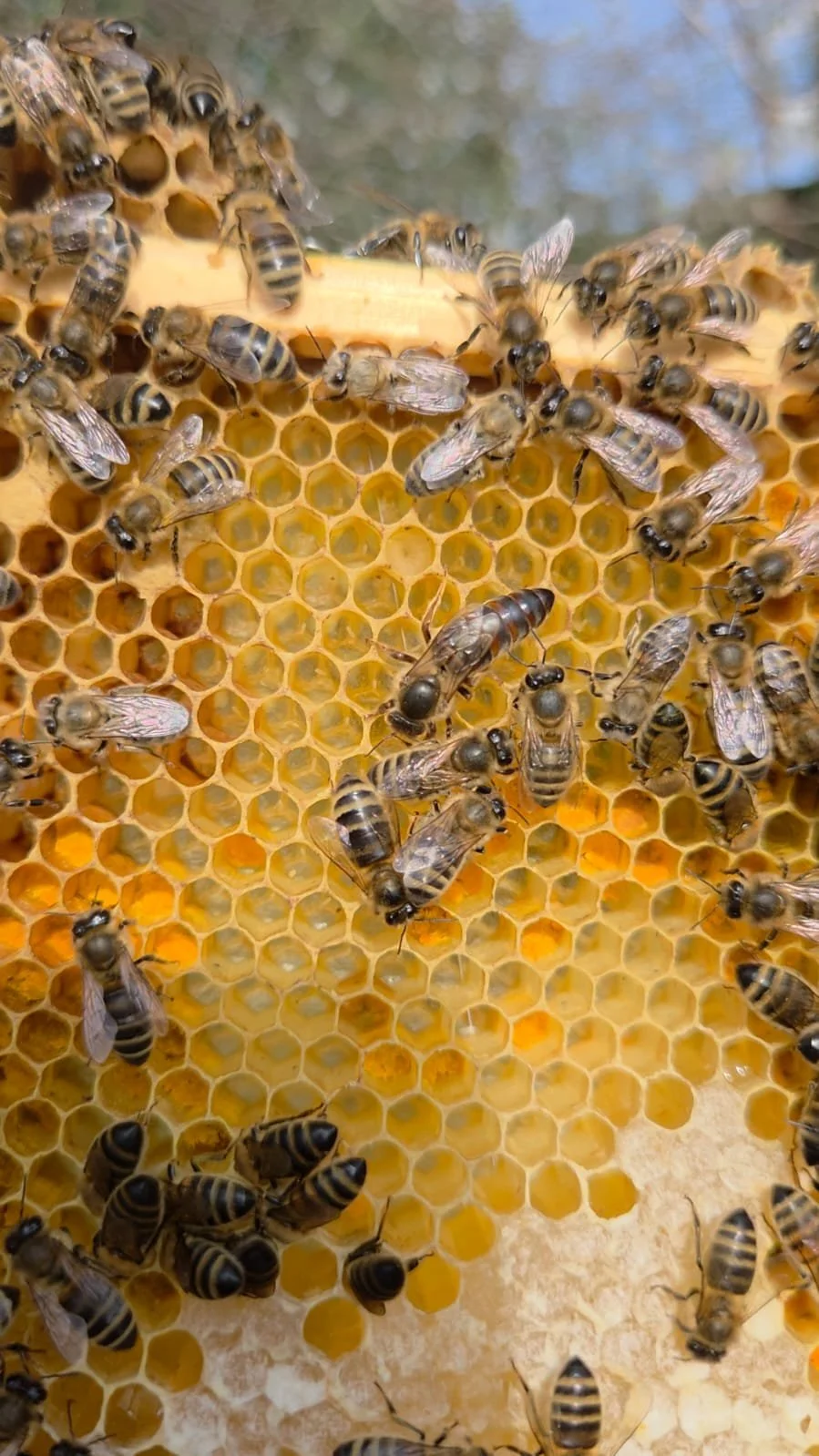
British Black Colonies are naturally more defensive and alert as their genetics are closer to that of undomesticated wild bees. These traits make them better at defending their hive against wasps and rodents looking to steal their honey stores. British Black Bees are also extremely hardy and are able to fly in colder, wetter, windier climates - well adapted to typical British weather - and therefore produce a more consistent honey harvest. These bees are also excellent at overwintering as they consume less stores in winter and spring than their Buckfast cousins. Overall, British Black Bees are for beekeepers who value native hardy bees, live in areas with a worse climate or less forage, or want a low-maintenence resilient hive.
Manchester Buckfast Colonies are known for being easy to manage due to their gentle and calm temperament. The energetic foraging and rapid brood expansion of Manchester Buckfast Colonies makes these bees highly productive when it comes to producing honey or expanding the hive - demanding more hands-on care from the beekeeper to prevent swarming. Overall, Manchester Buckfast Bees are for beekeepers who value honey production and colony growth, live in high forage areas with good weather, and want a calm and forgiving hive.
Our Gibwood line is bred from a Manchester Buckfast queen with a particularly calm temperament and impressive disease-resistant behaviours. These genetics have been carefully selected over the last 5.5 years to produce bees that are ideal for hobbyist beekeepers. With consistently beautiful laying patterns, successful overwintering, and a forgiving nature - the Gibwood line has proven itself to be both reliable and a pleasure to work with.
2026 or 2027 Queen?
Queens produced in 2026 are overwintered queens who have proven their desirable traits - such as a consistent laying pattern, colony strength, hygienic behaviour, and calm temperament. Overwintered queens are a lower risk purchase as they have successfully survived their first winter and are mature and ready to facilitate fast colony growth when you introduce them to your hive. This option is best for beekeepers who want a reliable queen, early-season growth, or to replace failing queens mid-season.
Queens produced in 2027 are first season queens. These queens are younger than overwintered queens and so don’t need to be replaced as quickly. First season queens have a very low chance of swarming, and it is therefore common practice for large scale beekeepers to requeen their colonies with first season queens each year to reduce time spent on swarm checks. This option is best for beekeepers looking to expand their apiary or who want the longest possible working life from a queen.